Tag: slider

  • Operation Rainbow Pt. 2

    Operation Rainbow Pt. 2

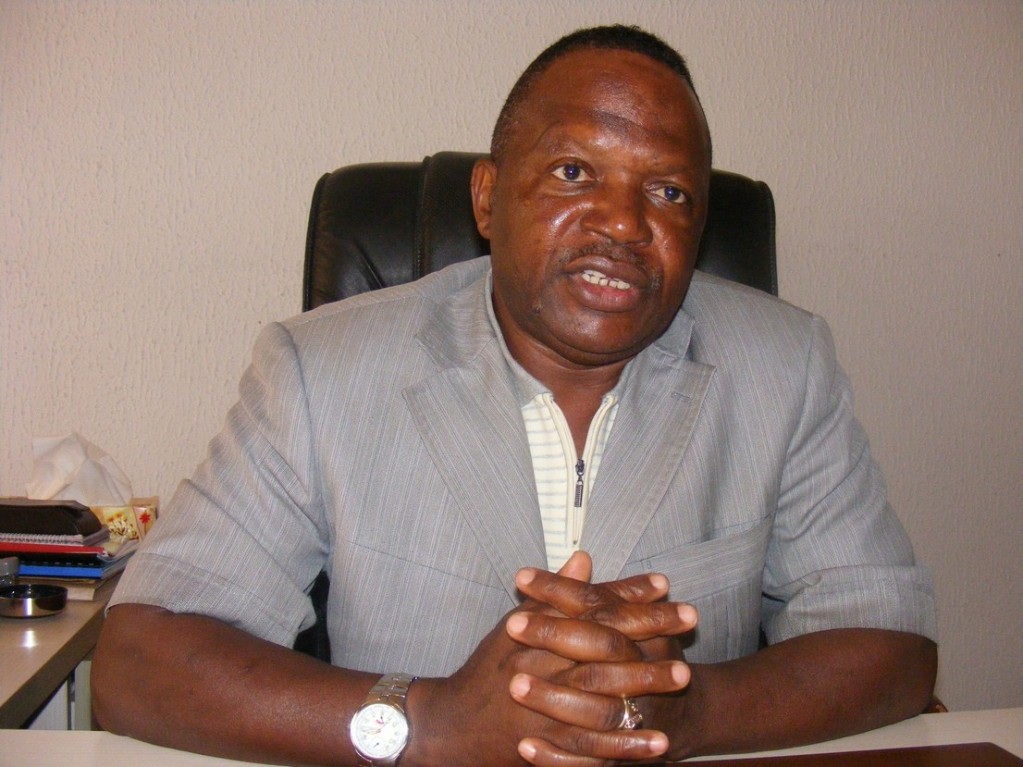
    The following is the second half of an interview with Air Vice Marshal Bala Danbaba, Plateau State Coordinator for Operation Rainbow. Click here to read the first half.

    TMV: In view of the protracted crises the state has experienced, what proactive measures will Operation Rainbow adopt to forestall future reoccurrences?

    Marshal Danbaba: That is why I have told you emphasis is on intelligence gathering. We are putting in place a very robust intelligence network. Of course, if you get to know the crisis on time you will be able to stop it before it even starts and then escalates to something nasty so, the important thing is let us know what’s happening. So you must be ahead. Pragmatic steps must be taken so that you will nip it quickly.

    TMV: I was asking about the degree of preparations of O.R for the daunting task ahead however, you have said so much concerning that and …

    Marshal Danbaba: (Interjects) We are already working. Rainbow is operational only in the physical aspect—even the physical aspect you have seen the deployment, but it is not fully. We will be fully deployed, fully operational if we deploy to all the other parts of the state. Right now we are concentrating on Jos North and Jos South until we get all the elements in place. We cannot cover the entire state so we are doing it in stages. But in the political aspect and the economic aspect we have started the process, even the social aspect. Sensitizing the public on the need for peace, for example, is one of the things we have put in place. Arranging seminars and workshops for key political office holders is one of the objectives so that they know the need for co-existence. The need for good policies of government, the need for good economic policies—these are some of our objectives—to make sure that the youths are fully empowered to be on their own, to have something to do because that is where the problem is. A lot of poverty is within the society. How do you reduce poverty? It’s through employment. You must create avenues for people to be gainfully employed. If you don’t do that then you are just sitting on a keg of gunpowder. So you must make government understand why there must be jobs, why there must be quality because those are the areas that will fit other critical areas. If you emphasize some critical areas it will have ripple effects on parts of the society.

    TMV: Some more rumours have it that the recruitment into O.R has been politicized because politicians seem to have hijacked it, hence the publics’ loss of confidence in the exercise.

    Marshal Danbaba: If you had it all correct. I am not a politician and it was done professionally. It is not a political outfit, it’s a security outfit and if you want the best from your security outfit you must do it professionally because in every community we have people from different political parties, even within your family you have different backgrounds. The person you might like might not be whom your wife might like. That doesn’t mean that we you cannot live together, so it is not correct to say that preference was given to anybody. What we did was to go round all the local governments. We advertised it on the radio and the television we told them the dates we are going to go round, interested members should come out and forms were issued to everybody that came out. Maybe what will disqualify you will be the medicals. We are going to sample them through medicals, not too rigourous but rigourous enough to say yes this man can undergo some basic training. So if you are screened medically, that is not political. There’s nothing political about it at all!

    TMV: Recently, the Secretary to the State Government (SSG), Prof. Shedrach Best in a six-page postulation berated what he termed the “Federalist approach to security arrangement in the state”. He further advocated for a state police. Do you subscribe to that?

    Marshal Danbaba: You see, it is the approach even as it is if you remain professional you will be effective. The key word is having a professional outfit that will serve the people and that will protect the people. That is the point. You can have a state police that will be politicized, unprofessional and at the end of the day it will not help the system. You can have a federal system highly professional that can serve the people. The most important thing even if you want to run a state police is it must be professionally done. Security issues must not be blemished with emotions. It must be professionally done and must be seen professionally. No emotions when it comes to security issues. So it is not the system, but caliber of people, caliber of leadership of the security outfit that matters. Once that is compromised, if you like change the name to whatever—you will not get the service that you desire. So mark my words, you must have professionals to head the security agencies.

    TMV: At the recently concluded five-day retreat for top government functionaries at the Obudu Cattle Ranch, Cross River state, among many other things, the state governor, Jonah Jang said, “The military is saying that O.R can not cope with the security challenges”. What’s your take on that sir?

    Marshal Danbaba: The governor said that?

    TMV: Yes sir, he obviously was quoting the military, it was on some national dailies.

    Marshal Danbaba: That will be incorrect because if the Task Force can cope, O.R. can even cope better because of the composition. Like I told you, it’s the same members of the armed forces that will form the bulk of the elements in addition to that we have brought in the paramilitary. Yes, so the equipment— even if that’s what we are talking of those coming from the Rukuba barracks, they will have virtually the same equipment. So once you have the logistics that you want, that you need to meet the security challenges, there’s nothing that they can not tackle. It’s the same members of the armed forces that will be there. There’s no special training that the Task Force have done that those in Rukuba barracks have not gone through, it’s the same internal security exercises that they have been participating in. They are talking as if those from Rainbow are coming from another country. No, they are going to be picked from the same armed forces like I told additionally we are having the paramilitary because it is not everything that you will send the army for to go and tackle. If the women are going on riot or demonstration, Civil Defense will go in, police will be there, or for students demonstrating you don’t send soldiers, you send police. You have Civil Defense, but sending the soldiers depends on the threat at any particular time. If they say there are people attacking with guns somewhere, you don’t have to send in Civil Defense. So the threat will determine who you send there at any particular time. So it is not correct for anybody to think that Rainbow, with the composition that have been approved, cannot handle it.

    TMV: Still, at that retreat, Governor Jang further called for the withdrawal of soldiers from the state, citing that “The armed forces have started taking sides in religious crises.” Do you thing the withdrawal of the soldiers of the Task Force is healthy for the state?

    Marshal Danbaba: In every profession there are bad eggs. Every profession! And there are few bad eggs here and there, but that doesn’t mean that the whole armed forces is bad, I don’t think that is a true picture. Like I said, in every profession we have some bad eggs. What probably [Governor Hang] was saying was that, okay, these people might have stayed long, let them go, and of course, the ones that have been proposed to come in from the barracks might replace them, but I don’t think he is saying that the armed forces should not, can not perform at all, no! I don’t think that was the picture he was trying to paint.

    TMV: The Bokom Haram scourge seemed to be defying solutions in some North Eastern states, Borno to be precise, what other measures do you think government can adopt to put an end to the menace?

    Marshal Danabab: The government must come with a very robust intelligence network and be very adaptive to the changing tactics of the insurgents. You must be ahead of them so that you can counter whatever moves they intend to take and good intelligence. The tendency is that you will get to know their next moves, where they are, their tactics and other things. So the first thing is adequate training of the operators. You must train, train, train and be ahead of them. Number two is you should be very adaptive, which should be part of the training. To adapt which is like a mouse game and it is the guy who is proactive who is ahead in terms of tactics—in terms of orientation that will carry the day. You must have some logistics to be able to properly do justice to the service. And it is not just force. There are those that are at the borderline, those can easily be taken out and then of course you sieve them from the extremists.
    TMV: Finally, do you think it is a wise decision that the federal government has elected to openly negotiate with Boko Haram in view of some of their staunch demands? Such as suspension of the Constitution of the Federal Republic of Nigeria, dissolution of the present system of government, establishment of Islamic government and states and adoption of shariah legal system in every part of the federation?

    Marshal Danbaba: That is left to the federal government, both the executive and legislators to decide whether the demands are what the country should take. You have an issue where somebody is making those demands, now it is left to the federal, the legislators to now say this is where we want it to move. Those are constitutional issues, serious constitutional issues raised and it is only the executive and the legislators— the lawmakers that will take far-reaching decisions on those issues. Are those demands the country can take? If not what do we do? Those are not simple issues. They are very serious questions raised that require some serious thinking.
  • BOKO HARAM STRIKES AGAIN

    BOKO HARAM STRIKES AGAIN

    Reuben Abati, Ph.D, Special Adviser to the President

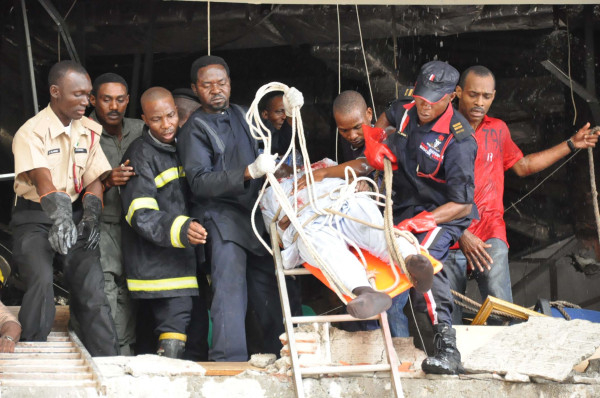
    President Goodluck Ebele Jonathan and the Government of the Federal Republic of Nigeria utterly condemn the barbaric, senseless and cowardly attack on the United Nation’s Building in Abuja this morning.

    The President believes that the attack is a most despicable assault on the United Nations’ objectives of global peace and security, and the sanctity of human life to which Nigeria wholly subscribes.

    He extends his sincere condolences to the Secretary-General of the United Nations, Mr. Ban Ki-Moon and all members of the United Nations family who have lost loved ones in the heinous attack.

    President Jonathan reaffirms the Federal Government’s total commitment to vigorously combat the incursion of all forms of terrorism into Nigeria, and wishes to reassure all Nigerians and the international community that his Administration will spare no effort to bring the perpetrators to justice.

    The President has also directed all relevant government agencies to assist in the search and rescue effort at the UN Building, and ordered heightened security across the Federal Capital Territory.

    He urges all Nigerians to cooperate fully with the government in its efforts to expose the desperate elements who promote violence, terrorism and division in the country.

    While noting that by today’s attack, we are once again reminded of the international character of terrorism and its indiscriminate targeting of innocent civilians, President Jonathan affirms Nigeria’s determination to continue to play its part in the global effort to eradicate the scourge of terrorism in all its ramifications.

    He urges all Nigerians and foreigners resident in the country to go about their normal affairs with the full assurance that the Federal Government and its law enforcement agencies will continue working diligently to ensure the full protection of lives and property in the country.

  • FACES OF THE AUG 15 HEIPANG BUTCHERY

    FACES OF THE AUG 15 HEIPANG BUTCHERY

    By V. Al-pea

    As already reported, eight members of a family, including women and children were brutally murdered in what appears to have been a premeditated attack in Heipang, Plateau State. The incident, which occurred around 12 a.m. on Monday, August 15th at the old railway quarters, threw the residents of the community into a state of disarray.

    Images of Family Hacked to Death

    Victims of the rampage were the family of Mr. John Agboh, a security guard with a local church. While he was away at work on night duty, the attackers arrived at his house dressed in military uniforms and began shooting sporadically. Forcing entry into his room, they shot and killed his wife and, using what appeared to have been bayonets, stabbed and slaughtered his three children. Upon hearing the news, Mr. Agboh collapsed and was later taken to a nearby clinic where he remained comatose for part of the day.

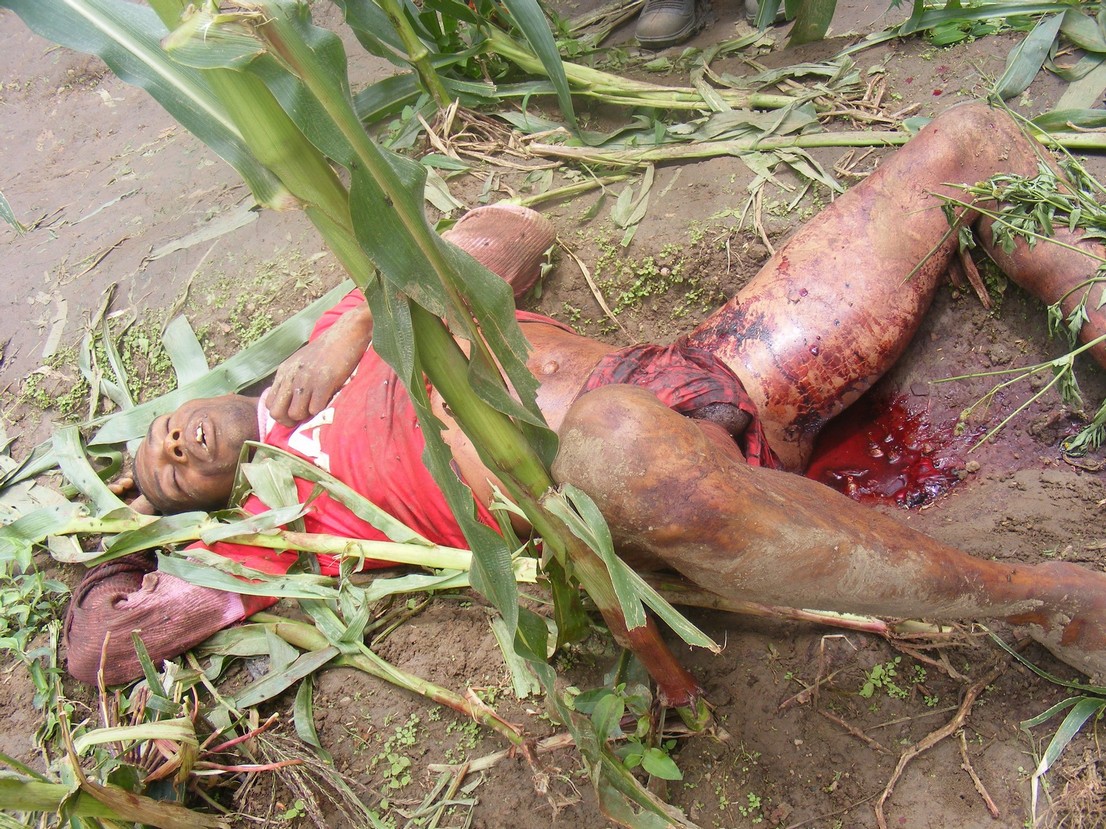
    An elderly female neighbor of Agboh said she was sleeping when awoken by gunfire and footsteps, followed by screams emanating for John Agboh’s residence. According to her, she opened the door and “suddenly saw [Agboh’s] older son Nnamdi [dash] out of their house. On his heels were two armed soldiers in hot pursuit”, she reports. “Then I quietly eased myself out of my room and ran into the maize farm adjacent our house and lay down quietly,” she added. From there, the neighbor accounts that she heard Nnamdi scream again. Another gunshot followed close behind, then silence.

    Nnamdi John Agboh With His Genitals Cut Off

    The Messenger Voice (TMV) verified her account as Nnamdi’s body was found mutilated in the cornfield. The assailants also went away with his genitals, which they had cut off.

    Another eyewitness, Mr. Joseph Dalyop who resides about 50 meters away from the Agbohs said that he quickly alerted his family and left their rooms to hide in the nearby cornfield after hearing the gunshots that night. “Barely thirty minutes later, I saw the patrol pickup van of the Joint Task Force approaching and they stopped in front of my house.” Daylop said, “Three of the soldiers disembarked and went into our house. They went from room to room shouting to inquire if anybody was home.” Dalyop and his family managed to remain calm in the farm until the soldiers left.

    Plateau State Government condemned the attack and ordered the security forces to investigate and bring the perpetrators to justice. TMV made efforts to speak to the Divisional Police Officer in charge of Barkin Ladi local government area concerning the attack but was told that he had gone to brief the Commissioner of Police. The unit commander of the JTF posted to Heipang was also unavailable for comment.

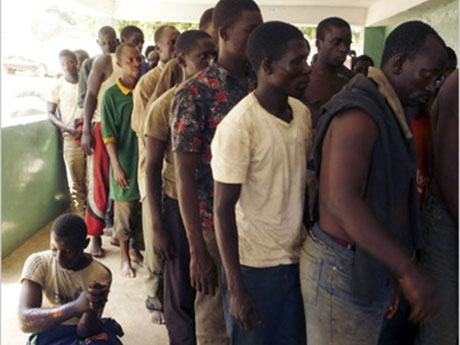
    This Boy Was Choked to Death

    While riding to Heipang to cover the incident that morning, it was apparent that the soldiers had deserted their posts. As a result, irate youths had taken over the major road, burning tires and cutting off the flow of traffic. Stranded travelers lined the roadsides from Maraba Jama’a. Frustrations were writ large on their faces as some folded their arms across their bosom and discussed the ugly situation.

    TMV was the first news team on site after the attack. To get to the site, TMV had to travel through Foren Junction where a rabble of angry youth wielding sticks stopped and searched the few vehicles that journeyed in that direction. They accosted and forced TMV to put leaves on the travelling vehicle, a measure of solidarity with their plight. After approaching the railway crossing in Heipang, a second group of angry youth required again for TMV to identify ourselves.

    Once allowed to proceed, a drunken angry youth assaulted us and said, “You [journalists] always come and cover stories of any attack of such nature, yet nothing has been done to help our situation. You end up enriching yourselves out of our predicaments,” he said, seething like a cobra. A TMV camera was damaged in the process. This attracted a handful of his peers to walk up and, after understanding the situation, scold the young man, subsequently allowing passage as one of the youth assisted TMV.

    Captain Charles Ekeocha of the JTF has already denied involvement of officers and men of the Special Task Force, as it was previously heard on the state owned media. Captain Ekeocha explained that troops were called in to stop the attack when a vigilante opened fire on them, causing the JTF to withdrawal to Maraba Jama’a. When TMV conducted a phone interview wit Gyang Samuel, a Heipang native, he emphatically maintained that no confrontation broke out between vigilantes and JTF soldiers. “Members of our vigilante only carry bamboo sticks and sometimes machetes whenever they keep vigil,” Samuel claimed, “How can they effectively confront soldiers armed with sophisticated weapons? It is pure lie.”

    In a Wereh Village of Riyom local government, four persons, mostly women and children were killed in a similar incident that occurred last year. An Identity Card belonging to a JTF soldier was found at the scene of that crime, but General Umar, the task force commander defended the JTF. He asserted that the identified soldier had once been involved in a civilian brawl, which resulted in the loss of his ID. This implied that the ID was planted at the scene to link the JTF to the assailants.

  • What Happened to the Dogo Nahawa Trials?

    What Happened to the Dogo Nahawa Trials?

    By V. Al-pea

    Since the arraignment of twelve Jihadists who were captured after the gruesome massacre which took place March 7th 2010 at Dogo NaHawa, very little has been heard from the federal high court in Jos. Thus The Messenger began looking into the matter. From inquiries made, there appears to be confusion and skepticism about the date and place the trial is to be held.

    You should recall, the twelve were accused of terrorism, armed with dangerous weapons, attacking and killing many persons, intimidation and the destruction of properties at the arraignment. While they had allegedly confessed to the crime after they were captured just after the attacks, the twelve entered a not guilty plea at the arraignment. Testifying for the prosecution, Police Inspector Orji Okwaji told the court that the statements of the accused were interpreted and read back to them for verification after it was taken. Also the police officer stated that no intimidation or force was used to obtain statements from the accused. In addition, the officer said that the accused willingly admitted to taking part in the killings.

    When cross examined by A.S Ahmed, the accused counsel, inspector Orji said he has no recording of the statements which were made by the accused. Nevertheless, he insisted that the statement made by the accused men were written down by the police and that the written statements are accurate. Asked if the accused made their statements in a friendly atmosphere without duress, the police officer said that the men joyfully and explicitly narrated their mission of vengeance on the people of Dogo Na NaHawa without remorse.

    After the proceeding, The Plateau State Attorney General Mr. Edward Pajok complained that the case was within the jurisdiction of the Plateau State High court and that it should not be tried at the Federal High Court. Since his statement, there have been rumors about difficulties moving the case forward. The federal governmentʼs silence on the case has been deafening, further fueling the rumors.

    Unable to obtain official statements about the case from the high court and the ministry of information, The Messenger tracked down some legal experts including a Plateau State prosecutors. Speaking with the prosecutor, who wanted to remain anonymous for this story, The Messenger gathered, as he alleged, there are pressures from the federal level to suppress the case. His comments appear credible from the stand point that the case is currently in the hand of the federal government. Nevertheless, we have no evidence to confirm the validity of his claim. We were also unable to obtain any information about  jihadist who were taken to Abuja after the arrests. This is very important because up to 300 men were arrested in connection with the killings. As our efforts to get documents to substantiate several allegations and the efforts to track down arrested jihadists have both been so far unsuccessful, we intend to further report on this matter soon. Meanwhile a ciivil rights officer in Abuja expressed concern that the case had stalled because of the last elections.

  • A Broken Rock!

    A Broken Rock!

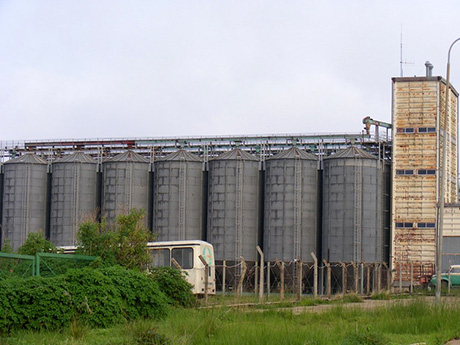
    Relics of Jos International Breweries

    By V. Al-pea

    The economic state of the nation is a dismal tale when viewed through once thriving companies and industries. Even more menacing, the economic slump continues to destroy organizations that had initially survived it.

    Profiling one of the companies that had fallen pray to the economic downturn, The Messenger Voice (TMV) visited Jos International Breweries (JIB). A former Plateau industrial heavyweight which was founded in 1975, JIB was a product of a tripartite investment agreement between Plateau State Government, a Danish firm and the Industrialization Fund for Developing Countries.

    First opening its doors with the popular Rock Lager Beer, the company later introduced Malt Royale, a non-alcoholic beer and other drinks to diversify its product line. Within five years of its birth, JIB became a thriving company, producing 250,000 hectoliters of drinks per year.

    The success allowed JIB to established new subsidiaries, which included Plateau Bottling Company, Pioneer Milling Company and Breweries Agro Research Company. Its rapid growth attracted the attention of another brewing giant, Guinness Nigeria, making it possible for both companies to sign a bottling contract that allowed JIB to maximize its capacity. Moreover, the success allowed JIB to establish a winning soccer team, the “Rock Football Club”–also known as “JIB Rock Strikers.”

    To the average eye, JIB was not only here to stay, it had established itself as one of Nigeria’s leading breweries. Unfortunately, the 1990s marked a turning point. The once thriving company began to struggle, leading to the termination of the bottling contract with Guinness Nigeria in 1995. Now bleeding financially, it’s subsidiaries were sold for cash and the famous “JIB Rock Strikers” disappeared. By August 2009, production grind to a halt, an unimaginable prospect granting the company’s glorious past.

    To find out what went wrong, TMV visited JIB’s factory hoping to conduct an interview with any available personnel from the company. But even before speaking to any person, while visiting the factory, the physical state of the once illustrious campus gave a vivid account of the situation. It lay desolate with the once well-groomed ornamental plants around the facility now untamed. Weeds were growing in the pavement cracks while the once carefully manicured grass was growing out of control. In between the weeds and untamed plants were relics of old abandoned vehicles, rusting and further blighting the scenery.

    As luck would have it, we were able to find a former manager who was willing to converse about the company. Requesting that we keep his identity anonymous, he revealed that JIB was “forced to close shop as a result of out dated equipment and mostly because mismanagement.”

    Expounding on what went wrong, the manager told TMV that the company became unprofitable, forcing it to borrow money. According to the manager, the company currently owes various contractors over N600 million. To compound matters, he added, the company owes an undisclosed financial institution over N1.4 billion.

    “Since the company could not liquidate its debt, the financial institution was coerced to appoint a receiver and manager to sell the company for it to recoup its money. This attracted the attention of the state government, who, after several botched attempts towards revamping it, engaged the services of a consultant–The Deloitte Group–to woo more investors and reconcile the company’s indebtedness”

    Researching the situation, TMV gathered that such an attempt to revamp JIB was initiated by the administration of Chief Michael Botmang, after he succeeded former Governor Chief Joshua Chibi Dariye. Though unconfirmed, sources pointed out that Chief Michael Botmang gave JIB N500 million. The money was however allegedly siphoned–indicative of the company’s chronic mismanagement.

    Since the previous governor’s effort failed, the current state government reportedly fired the entire board. Along with firing the board, the government also sacked the former general manager of 14 years, Mr. Albert Kattiens. In his stead, Mr. Daniel Gowon was appointed head of the new interim management. Meanwhile, a new board was reconstituted with Chief John Manklink as the chairman.

    Back to our conversation with the JIB manager–he further told TMV: “Not even the sum of N2 billion approved for the company by the Federal Government’s Intervention Fund for ailing industries, through the Bank of Industry could be assessed due to bad management. Although we have heard that the newly constituted management and board have opened discussions with financial institutions on how to solve the numerous problems of the company, we are praying that they succeed. As you can see, we have been forced, not by choice, to stay out of work for many months without pay,” the JIB manager concluded.

    With the Plateau State authorities able to install a new management team and stop the bid to sell JIB, it appears the government prevailed over the bank that is owed N1.4 billion. Still TMV could not fully ascertain the future of JIB. Meanwhile the manager we spoke with is hopeful that the company can be resurrected and restored.

  • Resurrection from the Dead

    Resurrection from the Dead

    Jos Transportation System Goes “Back to the Future.”

    By V. Al-pea

    The Plateau State transportation system recently received a boost with the reactivation of a small section of its hitherto morbid railway network. This is obviously coming on the heels of growing transportation needs due to population growth and increasing fuel costs.

    Hooting emanating from the old refurbished trains now resonates across a sizable part of Jos metropolis, overpowering the familiar Cathedral bells that had, before now, dominated that early hour of the day. Strange as it might sound to the new generation, the sound is nothing new under the sun. Over three decades ago, when Plateau and Benue were one state, the trains ran regularly, playing a vital role in transporting goods and people.

    It is thus fair to presume that the blaring horn from the trains is music to many ears from yesteryears, since it is likely to remind them of the days of JD Gomwalk, then governor of Benue Plateau State. Those were the days when the Middle Belt was the center of power and Nigeria was a stable nation.

    Regardless, Kaduna was the first state to reactivate its old rail system–it took place under Governor Namadi Sambo before he moved on to become Nigeria’s latest Vice President. Plateau subsequently reconstituted its old train service, making it the second state to do so in The Middle Belt.

    When the reinstated train service initially caught our attention, we spoke with the transportation authorities before reporting this story. To our dismay, there was a hostile reception at the Railway Corporation. A female manager told us–“we have been instructed not to grant any press interview.” “If you want any, you will have to get permission from our Public Relations Officer who is at our district office in Kafanchan,” she added. Sensing that a trip to Kafanchan would likely leave us at the mercy of another power drunk Nigerian official, we decided to go to the train station, board its cars and report the experience.

    Upon arriving at the train station, we discovered that our mission was similar to the objectives of several passengers–a sizable number of them bought tickets from Jos to Kuru just to experience the new, but of course also, old train service. While questioning the passengers, a lady told The Messenger Voice (TMV) that she brought her loved ones for the experience because they had never traveled in a train. Likewise another passenger, who couldn’t cage his enthusiasm, said; “since I was born–and now I am 57 years–I have never traveled by rail–this is my first time.”

    When queuing to purchase the tickets there was a slight jostle–a childish behavior that continues to bedevil Nigerians. For some unfathomable reason, this unruly act repeatedly surfaces when Nigerians need to line up and take turns. Needless to say, kids were also frolicking about as their parents and custodians struggle to control them while still trying to purchase tickets.

    Costing N50 from Jos to Bukuru and N100 to Kuru, the tickets are a bargain compared to traveling by bus which could syphon as much as N100 to Bukuru and N250 to Kuru. It would be interesting to see the effect of the new train service on commercial transportation in the near future.

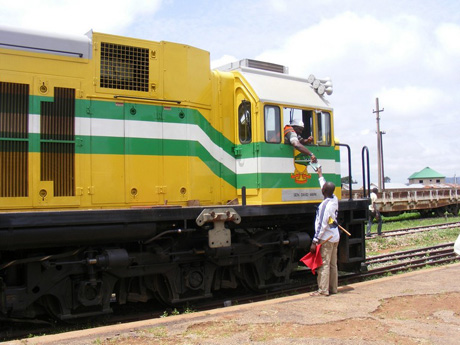
    After purchasing the tickets, the tussle when queuing notwithstanding, we eagerly boarded the diesel-powered train. Within a short while, the engine started pulling the four coaches along with its passengers. Driven by two engineers who were located in the main engine, the train also had two technical staff and three conductors who went from coach to coach checking passenger’s tickets.

    Just as the journey began, the train suddenly stopped at a mini station beside The Water Board office in Jos. Interesting enough, some passengers disembarked, a strange development since the stop was just a stone throw from the main station. Regardless, some new passengers also boarded, making it a net wash since a relatively equal amount replaced the ones that got off.

    The train then resumed its journey, this time gathering speed. Soon it was outside the city, meandering through beautiful meadows that are covered with fresh green grass from the new rainy season. In the background lay green mountains that are punctuated with large boulders, a distinct feature of The Jos Plateau. Overtaken by this remarkable scenery, it took a while to start paying attention to the occasional cluster of houses close to the railroad.

    Now paying more attention to the activities next to the rail, there were occasional farmers manually tilling the ground in groups. Almost as if they were acknowledging the new train service, the farmers often stopped their work and waved at the passengers. Appreciating their kind gesture, the passengers waved back each time the farmers greeted them.

    Willfully following the diesel engine, the coaches rocked back and forth, hypnotizing some of the passengers into a, for lack of a better phrase, “train travel frenzy.” The frenzy then graduated into a quasi party, with some passengers now moving from coach to coach, conversing with people they had never seen before the ride. Meanwhile others stuck their heads through the windows, a dangerous proposition. Worse yet, others lean their entire bodies outside the train, hanging away from its doors while holding a support bar. Reckless as it was, it was easy to appreciate their desire to absorb a blast of the cool Jos Plateau air.

    At the same time some passengers stayed quietly in their seats, taking no part in the circus. When we were at the height of the festive emotion generated by the locomotion, the train suddenly began to slow down. We were approaching The Bukuru Train Station. Many were shocked that we had already in Bukuru, but time had lapsed fast, courtesy of the festivities.

    Not long after stopping in Bukuru, the train headed to its final destination, Kuru. The experience from Bukuru to Kuru was every bit as euphoric as the trip from Jos to Bukuru, if not more. Once in Kuru, the train retraced its way back to Jos, again giving its passengers the same joyful experience hours earlier.

    When the train returned to Jos, there was nothing but satisfaction on the faces of the passengers–especially the ones who boarded the train just for the ride earlier in the morning. Many of the passengers looked like they had just flown in an airplane for the first time. Speaking with some of them after the rip, they expressed the desire to see the train services extend to other cities and towns.

    Before closing this report, TMV thought it was important, as a matter of public service, to build awareness about the train service. The trains run two shifts–morning and evening from Monday to Friday. On Saturdays a train conveys passengers from Jos to Kafanchan with a third trip. Once in Kafanchan, maintenance is conducted before the train returns to Jos.

    On another note, a very important one, we are concerned about the weak security before and during our trip. Though an armed policeman and a “Man O’ War” staff were in mufti to ensure security, passengers and their baggage were not thoroughly searched. Given the threat of terrorism in Nigeria today, more security officers should be deployed to vigorously search all the train cargo– human and otherwise.

    Finally, TMV wishes to impart a brief editorial about the reconstituted train service. We found the new service as delightful as it was also sobering. Contemplating the execrable fact that Plateau State had to travel back thirty years to make headway into the future left us profoundly sad–there are no words rich enough to describe our disappointment. While this new-old service is in of itself an indictment of Nigeria’s failure as a nation, we embrace it considering the alternative would have been nothing.