Tag: slider

  • Water Scarcity in Plateau State?

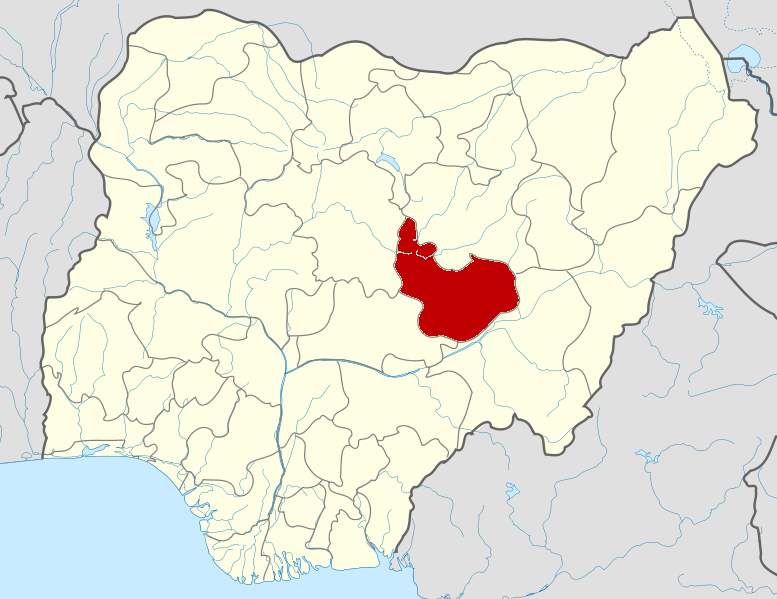
    Water Scarcity in Plateau State?

    BY V. AL-PEA

    Nearly seventy-five percent of the earth is composed of water. In the human system, that number rises to eighty percent. This figures demonstrate what an essential role water plays in the natural world and within our own physical bodies. Successive Nigerian governments have made promises to provide water to the people.

    To see how Plateau State is tackling its water needs, we visited its citizens and asked the following question: Can water be said to be constant in the city?

    Mrs. Grace Aina was one of the first people we presented the question to. Here’s how she answered it while declining to speak to the camera, shaking her head vigorously as she lamented that “It’s been years since Water Board supplied us water”. She was quick to add that it was the scarcity of water that has brought hardship to the people of her community that prompted her husband to sink borehole thereby vending water to the people. A 25 liter container of water sold at the rate of 25 to 30 naira.

    “We are supplied water only once in two months. And if that is what you mean by the word ‘constant’, well you are entitled to your words” John Ishaya, a pharmacist with the University of Jos health services who resides within the Senior Staff quarters told TMV.

    “Well, Water Board is trying but they should try harder”, replied Dung Chollom, a resident of Yantrailler.

    As a result of speaking with the people, TMV gathered that even if water was supplied to them, it was not constant.

    Considering the current climate surrounding state workers in Plateau, it is also appropriate to ask: Could the lack of constant water supply could as a result of the state government workers’ strike?

    “It is not the strike”, Mrs. Esther Audu, a seamstress in Tudun Wada declared. “Even before the workers went on strike, water supply was not constant. We always hear Water Board on the radio complaining about this and that as reasons for their failure yet they have not done anything to salvage our situation”, Mrs. Audu inferred.

    “How can you say it’s the strike?” retorted Luka Musa a civil servant resident in Hwolshe. Lamenting further Musa said that “we often get relief during the rainy season because some wells and streams get filled up, but now that the rain is fast receding, acute suffering as a result of water scarcity is staring at us in the face.”

    And in a bid to get response from the State Water Board, TMV called on the office of Idi Waziri, the Commissioner for Water Resources who is returning to the same office for a second time. However, the lingering imbroglio between the state government and its workers, which has prodded the latter to down tools, made TMV’s visit fruitless as all offices were under lock and key. Attempts to reach him on the phone also proved futile.

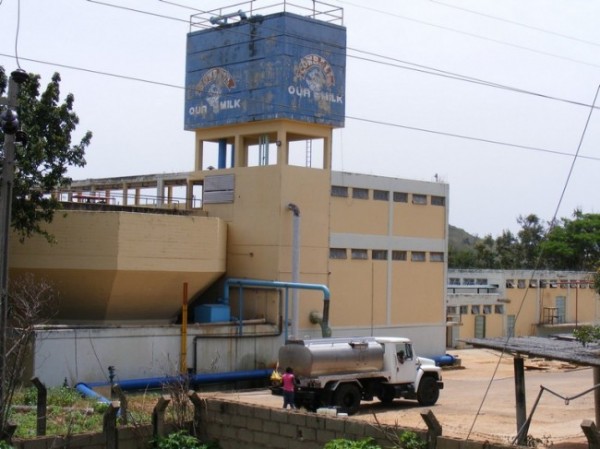
    As TMV rode further through the city metropolis, we noticed most of the water pipes looked dry, rusted and abandoned as a result of inconsistent usage. While some of the age long pipelines have outlived their usage, others were noticeably passed through gutters and other unhygienic environments.

    Major sources of water spread across the city were hand dug wells, streams and few manually operated boreholes. The wells and boreholes were constructed as a result of communal or individual efforts.

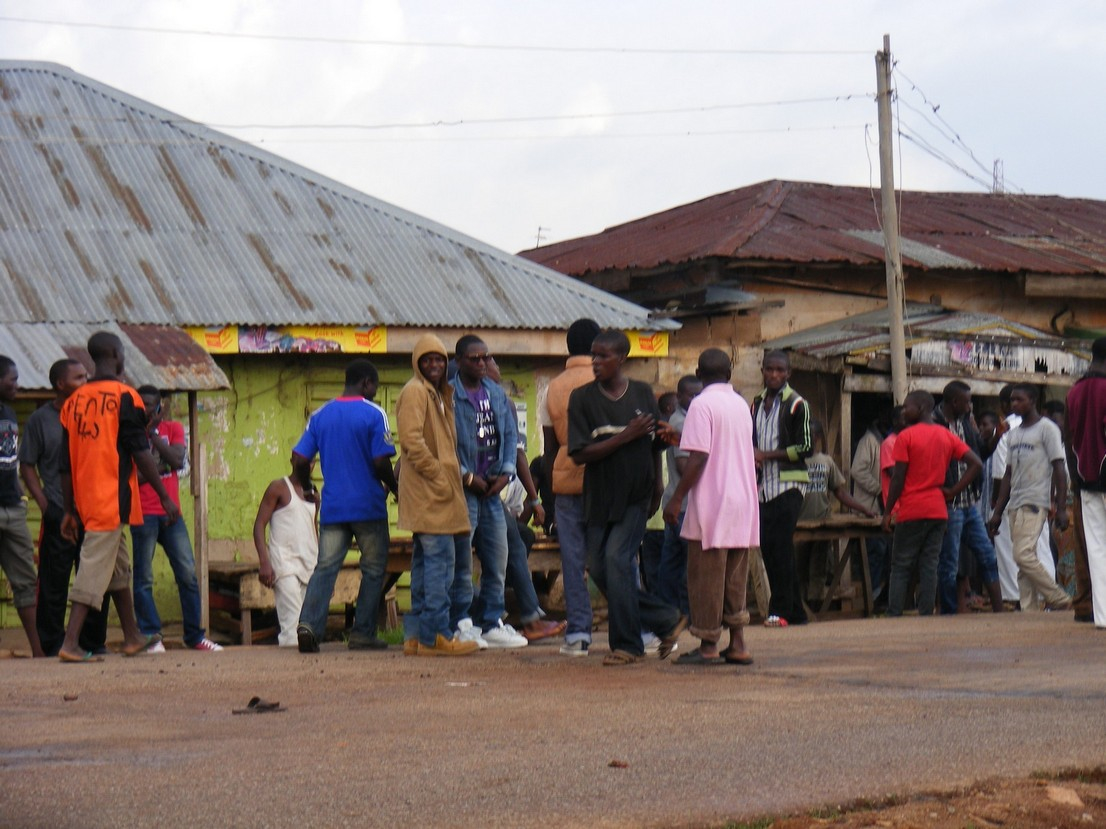
    TMV also noticed that the business of water vending is steadily receiving a boom now that the rainy season is fast ebbing out and due to the shortage of water, a necessity to people and their environment.

    TMV wishes to develop this story further
  • Lecturers Resume Strike As Students Protest

    Lecturers Resume Strike As Students Protest

    BY V. AL-PEA

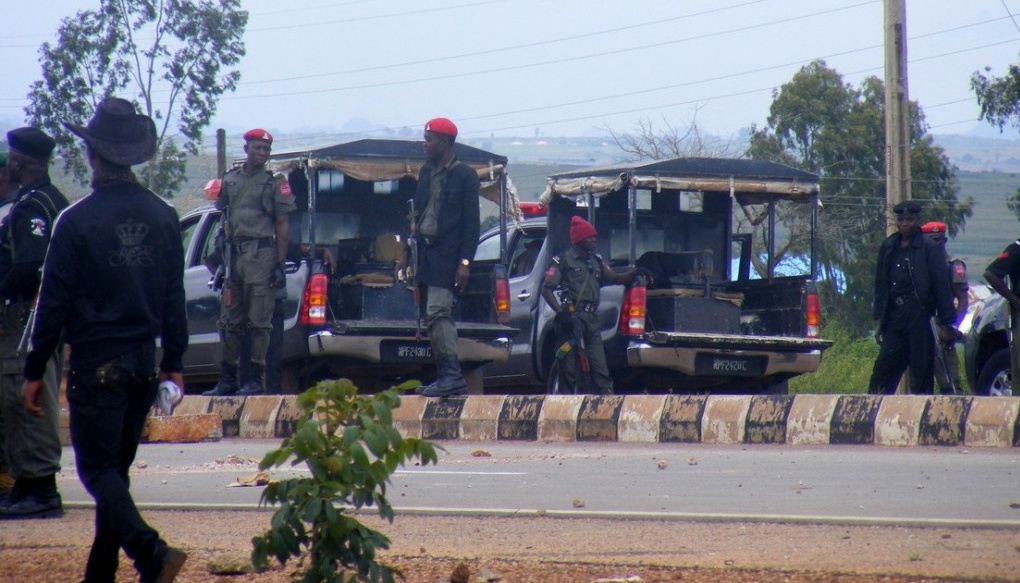
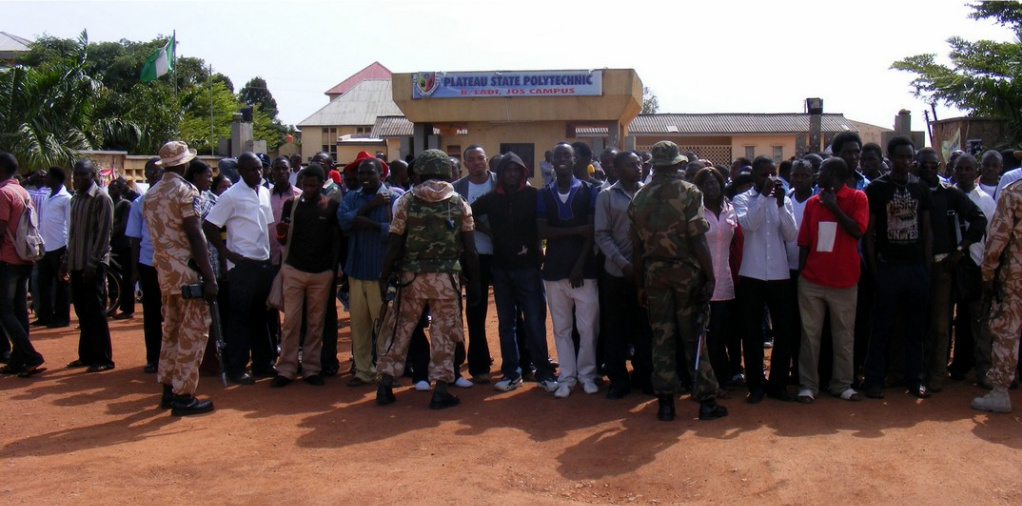
    Students of the Plateau state government owned tertiary institutions converged at the main entrances of their schools as they peacefully protest the resumption of strike by their lecturers. At the Plateau State Polytechnic Jos campus, armed security personnel were deployed to maintain law and order. As the security personnel cordoned the students and circumscribed the protest within the school premises, some of the officers were seen talking to the leaders of the students union on the need to maintain calm and peace as they protest obviously in view of the volatile security situation in the state.

    The Secretary General of the Students Union Government (SUG) of the polytechnic, Rottin Bitrus Bature who spoke to our reporters lamented the State Government’s “irresponsibility” to education. Speaking further, Bature said, “actually what’s happening is quite pathetic. We‘ve stayed at home for a year in the name of strike and while the strike was suspended we came to school, we were compelled to pay our tuition fees, we renewed our expired house rents and now we are being compelled to go back home again”. Bature also said they are denied admission in neighbouring states because of the situation in Jos hence the need for them to protest and express their plight to the outside world becomes imperative.

    One of the lecturers who pleaded anonymity blamed government for the suffering of the students at the receiving end of the industrial action.

    “The issue of tax, the State Government claimed it is from the Federal Government and they implemented it hundred percent when it came to the issue of salary enhancement which was also from the Federal Government the State government declined implementation. So we are saying if the State Government can implement tax by one hundred percent why can’t they implement the salary increase by the same margin if they are both from the same source? So far the State Government has offered us only ten percent instead of our fifty-three percent demand”.

    The striking lecturers had earlier requested payment of at least two or three month’s salary of their outstanding six months salary, which the government was able to pay that of one month only. Efforts by TMV to speak with someone on the side of the government proved abortive.

    It will be recalled that the workers had been on strike for about eight months until in August when the elders of the state stepped into the matter and brought it to an end on the condition that negotiation between government and the workers would continue in the interest of the students. The state government, who had the leverage to open negotiation with the workers failed in those regards, which has triggered another indefinite strike.

    Virtually all aspects of activities in the state have been crippled by labour industrial actions. On the 29th of September, 2011 the state chapter of the Nigerian Labour Congress (NLC) declared an indefinite strike over the non payment of the 18, 000: 00 naira minimum wage by the state government. In a show of solidarity for the plight of the workers, the Trade Union Congress (TUC), Amalgamated Union (AU) and other unions in the state also embarked on strike. Consequently, banks and public offices were forced to close shop. The union of petroleum workers and filling station owners also declared a 24-hour strike. Within the period, filling stations remained closed as they refused to sell to customers.

    In the heat of all this, the Plateau State Commissioner for Information, Yiljap Abraham announced this morning that the state Governor, Da Jonah Jang was embarking on a one month Annual leave. Speaking further, Abraham said it was the first time his boss was going on leave since he assumed leadership of the state for a second term. Although Abraham said there was no cause for alarm since his boss’s deputy, Longjang had been constitutionally empowered to act in the absence of the governor, Jang was berated by a cross section of the public who were of the view that he should have addressed these sensitive and pressing issues himself before he went on leave. “It is this same governor who declared a state of emergency on education during his first tenure. Now you can see he has refused to pay lecturers.” Mr. John Baraje, a public analyst, stated.

  • Youth & Idleness; Who Is To Blame?

    Youth & Idleness; Who Is To Blame?

    BY V. AL-PEA

    Like a cankerworm, the skyrocketing rate of unemployment in Nigeria has eaten deeply into the fabric of our society. Year in, year out, successive governments often make promises about creating job opportunities for the teeming youth. Yet, the labor market keeps bloating by the tick of the clock. The youth, who are suppose to be gainfully engaged for the progress and betterment of their society seem to have been neglected and abandoned to their fate. This ugly trend has plunged them deeply into social vices and pushed them to resort to other means of livelihood—hence, the rapid and steep increase in crime.

    The prevailing idleness of the youth has further pushed our reports through the streets of Jos, shebeens, and some locally brewed beer spots where most of them are found idly wasting their youthful lives away. They seem to comfortably make such places their second home. It is usually in these places that their youthful productive minds, intoxicated with various drugs and stimulants conceive dangerous ideas that motivate them to commit crimes.

    Evangelist Bulus stated, “An idle mind is indeed the devil’s workshop that is why you find out that crime rate is usually higher among youths because they have no jobs”
    His comments were supplemented by business man Jacob Moses. “… it is because they are jobless that they become veritably useful to perpetrators of violence.”

    Regrettably, some of the youths are trained artisans in various fields yet they lack the much needed capital to start off on their own. Not to speak of others who are graduates roaming the streets in endless search for jobs that may not even be found.

    What has happened to all the beautiful campaign promises of successive governments about job creation? Barrister Timothy Parlong, the Special Adviser to the Plateau State governor on Peace Building during an interactive session with youths on the need for peaceful co-existence, regrettably admitted the increase in unemployment rate, which “is staring us in the face”. Parlong further admonished them to engage themselves in gainful ventures no matter how little, even as they anticipate bigger employments. However he admitted, “government is not doing enough in terms of employment”.

  • Government Workers Resume Strike

    Government Workers Resume Strike

    Thursday 29th September, 2011.

    By V. AL-PEA

    The Plateau State Government workers have this morning resumed their suspended strike. The workers who are demanding the implementation of the 18,000 naira minimum wage have declared that this time there’s no going back until their demands are fully met.

    While speaking to TMV, one of the union members who pleaded anonymity blamed the government for failing to “continue negotiations with us as earlier agreed. That is why we have resorted to resume the strike”. Members of the Trade Union Congress (TUC), including banks have also joined in the strike as a measure of solidarity for the plight of the workers. Public offices, hospitals and schools have remained closed.

    As TMV visited Ahmadu Bello Way, the commercial nerve centre of the city, virtually all the banks situated there were under lock and key. Frustrated customers were seen loitering around as they vainly tried to do business. “When will all these nonsense stop?” an angry female customer who tried to use one of the ATM machine that had been temporarily disabled retorted. And as at the time of writing this report TMV gathered that other unions including that of the road transport workers are warming up for a total showdown the next day in support of the striking workers. A visit to the Joseph Gomwalk Secretariat revealed how the usually noisy and robust environment had suddenly become serene and quiet.

    TMV also made futile attempts to know the position of government from the Special Adviser to the governor on labour matters, who is part of the team negotiating for the government. He was said to have traveled out of town.

    And when TMV went to town to sample the opinions of the people concerning the industrial action, it was a mixed reaction. While some called for expedite truce between the workers and government in order to end the strike since it is the majority of the public that suffers as a result of their actions.

    Others blatantly blamed the government for “its insensitivity to the plight of the workers. If other states have agreed to pay their workers in fact in some cases even more than the said amount, I see no sense in the government trying to inflict suffering on the people. More over the President and the National Assembly have already made provision for them (governors) in their monthly subvention to accommodate the minimum wage palaver,” barrister Musa John told TMV in a telephone chat.

    It will be recalled that last month, the workers joined their counterparts in other states of the federation in a three days warning strike concerning the speedy implementation of the 18,000.00 naira minimum wage which had been passed into law by the National Assembly and assented to by President Jonathan. They subsequently called off the strike when the government acceded to their demands while the workers union gave a two weeks ultimatum for continuation of negotiations concerning how their request would be fully implemented.

  • Special Committee on Peace Building Convenes

    Special Committee on Peace Building Convenes

    On Monday 26th September, the Special Committee on Peace Building invited various communities within the Jos metropolis for a parley on how to end the incessant killings on the Plateau.

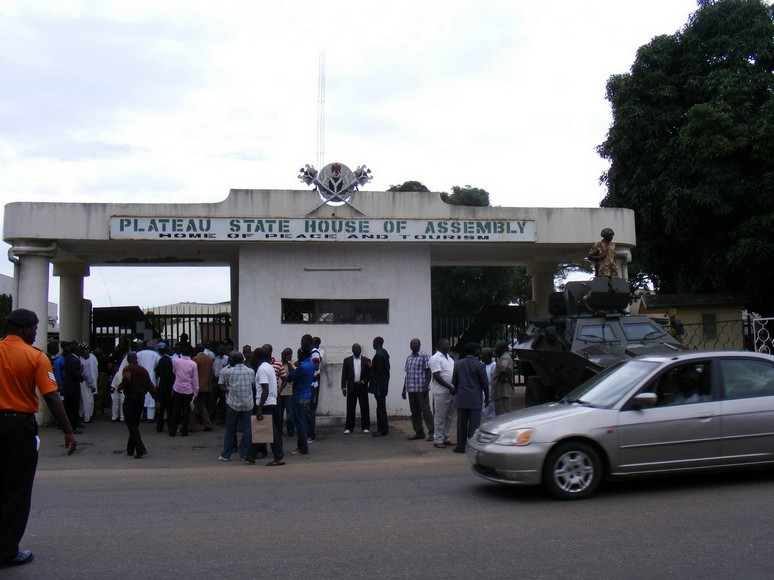
    The seven-man committee was recently inaugurated on the floor of the Plateau State House of Assembly on September 12. It contains the immediate past Speaker, Istifanus Mwansat as the chairman, Timothy Jatau, staff of the state House of Assembly as secretary, and five other legislators as members.

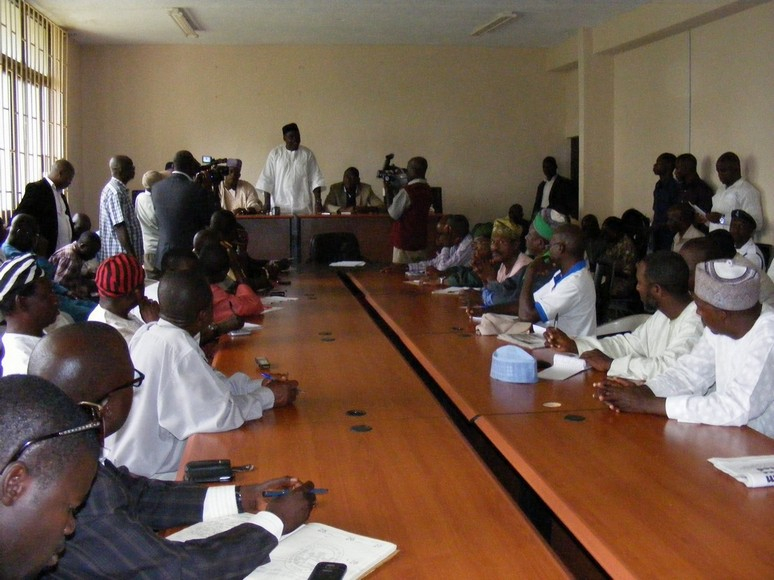
    About thirty-four communities considered flash points for crises and other criminalities, including the three indigenous tribes of Jos North local government area, Non-Governmental Organizations, the physically challenged and religious groups were in attendance at the state house of assembly.

    While welcoming the representatives to the interface, the chairman of the committee, Istifanus Mwansat disclosed that the inauguration of the committee was prodded by the security challenges the state is experiencing, and noted that “the House of Assembly deemed it fit and very expedient that we have this committee to also participate in the peace building process on the Plateau”.

    Mwansat further maintained that their purpose is not one of an investigative committee, explaining that “the mandate of this committee is one: that we have arrived at the strategic junction where every responsible person, within and outside of Plateau must put on his thinking cap and ask the question: what do we do?” And in the course of the discharge of its function, Mwansat said that the committee has met with groups, heads of security outfits, N.G.O’s etc.

    Opening the floor for discussion, barrister Smart Irabor, representing the South-South community lamented that countless similar forums had been conducted before, yet no positive result had been subsequently generated. He absolutely condemned the incessant killings while he admonished participants to educate their people on the need to consider citizenship, which he said had more advantages above indigeneship.

    The representative of the Miyetti Allah cattle breeders, Mohammed Nuru Abdullahi blamed the government for the unending violence. Abdullahi further said the crises have persisted because the state government is pursuing an ethnic agenda against Fulani citizens in the hinterland. He further identified the tussle for the ownership of Jos as the trigger for the crises even as he advocated for the implementation of the white papers of past commissions of inquiries on the Jos crises.

    Politics, religion, ethnic rivalry, lack of proper consultations for political appointments, rising wave of criminality as a result of proliferation of firearms, and tardy  response of security personnel were all cited as reasons for the incessant violence.

    Review and implementation of past reports on the Jos crisis, perpetual dialogue among communities, total disarmament of the various warring communities, genuine forgiveness and reconciliation, rehabilitation of youths, and compensation to victims were all cited as possible solution.

    The communities finally resolved to live together as one in a peaceful atmosphere.

    The chairman of the committee, Istifanus Mwansat expressed his joy over what he considered a successful parley.

    Monday Night

    In the mean time, one person has been confirmed killed and another gravely wounded in a midnight attack by suspected Fulani herdsmen in Larin, a village bordering Barkin Ladi and Riyom local government areas.

    A similar incident occurred simultaneously in Vyel, but was repelled by the locales that had kept vigil. No life was lost in the attack.

    Reacting to the attacks, the Chairman of Barkin Ladi Local government area expressed regret that the perpetrators of these heinous deeds are still bent on prosecuting their sanguinary agenda and appealed for calm amongst the people.

  • Ties Between Security Forces and Boko Haram?

    Ties Between Security Forces and Boko Haram?

    By V. AL-PEA

    The Federal Government is now investigating several security chiefs under suspicion of having alliances with Boko Haram.

    The suspicion arose after Ali Tishau, who was under police custody for allegations of terrorism, and a follower of Boko Haram, was handed over to the Defense Intelligence Agency (DIA).  Tishau then appeared on African Independent Television (AIT) accusing the police of “hiding bomb warnings from the Presidency”.

    A document made available to the office of the National Security Adviser (NSA) contained information of Tishua’s ties to Boko Haram, causing the National Security Council (NSC) to order his arrest on December 20th, 2010.

    Consequently, after being duly interrogated by the police and arraigned at the Chief Magistrate Court 1, Abuja on March 28th, 2011, Tishau was granted bail. His prosecutors re-arraigned him at the FCT High Court on 7th May 2011 when new evidence further demonstrating his involvement with Boko Haram surfaced. He was granted bail again.

    Owing to deteriorating security situations on a national scale, Mr. Tishau was arrested by the police to face further prosecutions.

    An anonymous source told us that “the Chief of Defense Intelligence, Major General Babagana Mongonu, had earlier sent a written request to the Police force, to hand over the suspect to the Defense Intelligence Agency (DIA) for the agency’s conclusion of its investigations of Tishau”.

    Inspector general of Police (IGP) Hafiz Ringim further ratified this request on July, 27th 2011 that the suspect be returned to the Police in line with normal security practice.

    When Tishua appeared on a private television network, the anonymous source said, “it is now clear that some top shots are working for interests other than that of the nation”.

    Although the police force has made efforts towards absolving itself of the allegations leveled by Tishau, the public’s confidence in the security operatives is fast eroding.

    President Goodluck Jonathan replaced the DIA Chief with Major General Sani Yakubu Audu. Jonathan’s order experienced some resistance until he maintained a resolute stand.

    Deputy Commissioner of Police (DCP), Olusola Amore, the Force Public Relations Officer issued a signed statement to the press that the suspect, Mr. Ali Tishau was released to a sister organization for investigation for information and intelligence sharing.

    “To date, he has not been returned to the Police. The alleged panic mood among the security chiefs is the figment of imagination of those peddling insinuations, as security agencies we’re building synergy to contain the present security challenges facing the nation”, Amores added.

  • SHARIA BANKING!

    SHARIA BANKING!

    Editorial

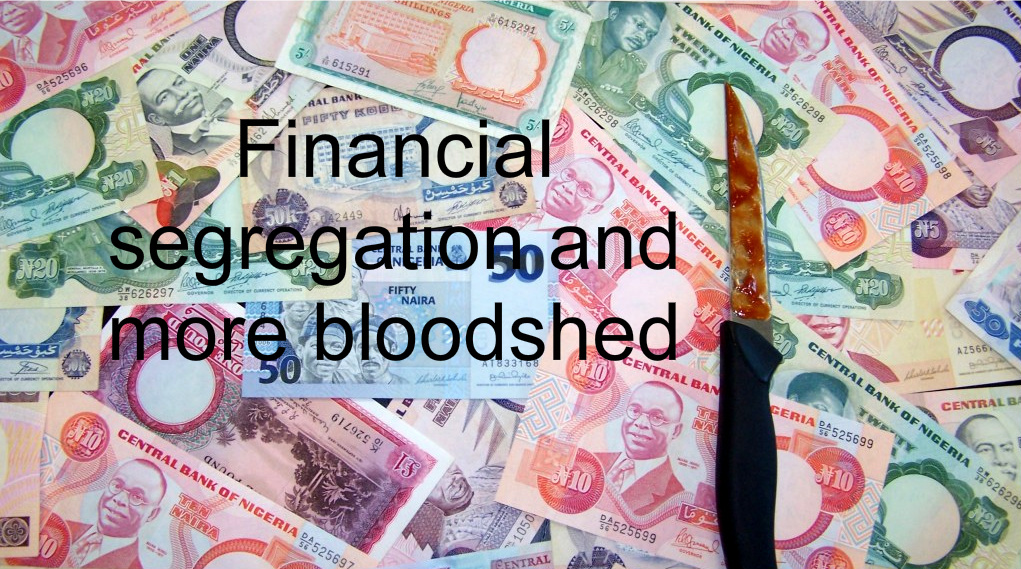
    Along with coining the wrong name for Islamic banking, there are some critical issues that have been left out of the debate to introduce this financial system to Nigeria. Instead of calling it Islamic banking, it should be called sharia banking since its guiding principle is sharia law. Had it been initially called sharia banking, Nigerians would have quickly seen various similarities between this new Hausa campaign for sharia banking and their passionate advocacy for sharia law prior to its introduction over a decade ago.

    You should recall, Hausa leaders told Nigerians that sharia law represented no harm and that Muslims would live in peace with their neighbors after its introduction. Once introduced, however, sharia law was everything but harmless. Using sharia, Northerners reinvigorated their domination agenda, giving jihadist the license to ethnically deplete Middle Belters in order to tip the balance of power and usher perpetual Hausa rule in Nigeria.

    Ten years later, the legacy of sharia continues to rig havoc, with Boko Haram bombing Nigerian cities for the purpose of expanding the law. Also, Hausa jihadists continue to attack the Middle Belt, murdering women and children in order to impose their political will.

    With the above fact, Nigerians must ask themselves these pertinent questions: Why should anyone buy this new Hausa advocacy for sharia banking, since sharia law has yielded nothing but terror? What is their hidden agenda with sharia banking? Moreover, what would be the negative repercussions of sharia banking?

    If Nigerians ask the above questions and carefully reconcile this new Hausa advocacy against their campaign for Islamic law over a decade ago, they would have no choice but to evoke this old saying: Fool me twice, I am a fool. Furthermore, Nigerian newspapers would be warning about these potential repercussions.

    Hausas would, for the most part, move private and state funds to sharia banks, creating a segregated financial environment in the North and Middle Belt.

    Once the funds are segregated, jihadists would be at liberty to attack and disrupt secular banking, since it would have no impact on their daily financial interactions.

    Hausa leaders would use the institution to commingle state with private funds for the sole purpose of enhancing their domination agenda.

    While commingling state and private funds, Hausa will also channel funds to jihadist, expanding their ethnic depletion campaign in the North and Middle Belt.

    Overall, sharia banking would continue to divide Nigerians further setting the nation in course of breakup.

  • Zamfara State Court Issues Cruel Shariah Sentence

    Zamfara State Court Issues Cruel Shariah Sentence

    By Public Information Project Management (PIPROM) on 9/10/2011

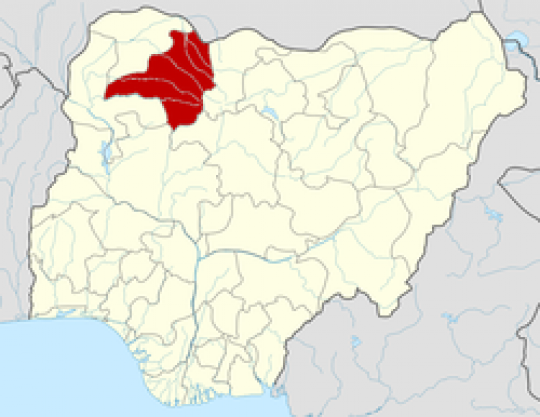
    The wrists of Auwalu Abubaka(23) and Lawalli Musa(22) would be amputated in public, a court in Zamfara State in Northern Nigeria have ruled.

    The sentence would be carried out according to Islamic laws which some predominantly Moslem states in northern Nigeria adhere to. The court also ruled that the convicts could appeal the sentence.

    Alhaji Muhammadu Abubakar who heard the case said that the convicts pleaded guilty to the charge of stealing a bull.

    “Based on the admission of guilt by the two of you of trespassing into the house and stealing a bull whose worth is well above the minimum value to warrant amputation, I hereby order that each of you should have his right wrist amputated,” Muhammadu Abubakar ruled.

    Abubakar also ruled that the sentence would take place on “market day for members of the public to witness”. Zamfara state incorporated Sharia laws into her legal system in 1999.

  • JOS BOMB EXPLOSIONS

    JOS BOMB EXPLOSIONS

    As violence continues in Northern Nigeria and the Middle Belt, two bombs exploded in Jos on Sunday September the 11th. The bombs, which were placed about 35 meters apart at a popular social spot in West of Mines, went off alternately.

    The first explosion came about 8:30pm, while the second one followed a few seconds later. By the time The Messenger Voice (TMV) got to the scene of the explosions, security agents had already cordoned of the area. In a bid to disperse people from the scene, officers sporadically fired their riffles in the air, further heightening the tension.

    The crowed that had gathered at the popular relaxation spot where the bombs exploded quickly vacated. Although there were no fatal casualties, as TMV gathered from inquiries, the incident generated a pandemonium that rippled across various communities in the city metropolis.

    Some youths at the Gada Biyu met a stiff response from the Special Task Force (STF) when they came out to protest the bomb blast. One of them was shot in the leg and taken to the Bingham University Teaching Hospital (Jankwano) for treatment.

    The explosions came ahead of a proposed peace convention planed for Christian and Moslem youths on Monday, Sept 12, 2011. Still, The Police and the STF have not issued an official comment about the incident and no group one has claimed responsibility for the bomb blasts.

  • 54 PEOPLE ARRESTED!

    54 PEOPLE ARRESTED!

    54 PEOPLE PEOPLE ARRESTED!

    By V. AL-PEA

    About 54 persons have been arrested in connection with the unabated grisly killings in Jos. The Commissioner for Information and immediate former General Manager of the state owned radio and television (PRTV), Yiljap Abraham declared Wednesday 7th September 2011 after the State Executive Council meeting.

    Abraham said that the suspects have been charged to court and are being tried.

    It is also pertinent to note here that about 49 persons, mostly women and children have been gruesomely murdered in separate coordinated attacks on various villages in the state in the last ten days. This is in addition to some 14 persons recently killed in Gwanfil village of Vwang district in Jos South local government area last Friday night. This attack came barely twenty-four hours after about 13 persons were killed in Tsohon Foron and Gashish of Kuru district in neighbouring Barkin Ladi local government area.

    Last Friday’s attackers were said to have arrived at Gwanfil at about 8:30 p.m. where they shot sporadically at their victims, hacking some of them to death. The victims include a pregnant woman, 7 adult males, one of which an elderly man of about 70 years; nine women, including a 60 year old, and four children, including a two year old. Two other victims who sustained deep cuts were rushed to the Vom Christian Hospital where one of them, Malam Boy later died and the other unidentified person was referred to the Jos University Teaching Hospital (JUTH) for further treatment.

    Reacting to the incident, the Plateau State governor, Jonah Jang through his Special Adviser on Media and Publicity, Ayuba Dangwong described the attack as unfortunate. Dangwong who spoke to newsmen regretted that it was becoming a daily occurrence. He also sued for calm as he assured the people that government will do everything possible to bring and end to the incessant attacks.

    The spokesman of the Special Task Force (STF), Captain Charles Ekeocha recently paraded a suspect identified as Mohammed Abdullahi. He said the suspect was arrested when a gang of about 50 persons clad in black attempted to raid Rop village in Barkin Ladi local government area. Captain Ekeocha said when the soldiers stationed in the village repelled the attackers, who took to their heels they later spotted one of them walking the road with a bag. He was stopped, frisked and a locally fabricated pistol and five rounds of ammunitions and a dagger were found on him.

    CALL FOR STATE OF EMERGENCY

    As a panacea for the lingering circle of violence visited on the people of Plateau, prominent personalities, corporate bodies, groups and Non-Governmental Organizations (NGO) across the country and globe have at different times proffered solutions. While majority of the calls were inclined towards prodding the Federal Government to truly sit up and bring to an end the senseless killings, recently a member of the apex chamber of the National Assembly, Senator Kabiru Gaya from Kano state added his voice to the list. Gaya boldly joined his counterparts (mostly from the northern part of the country) in calling for the imposition of a state of emergency on Plateau as a lasting solution to the crises. Gaya’s comment immediately attracted severe criticism. One of such was from his colleague, Senator Gyang Dantong who expressed surprised about such call coming from someone close to him. Dantong among other things said that a state of emergency was not the solution to the Plateau crises.

    Another of legislators from the state led by member representing Jos East and Jos South in the lower chamber of the National Assembly, Hon. In a press briefing in Jos, Bitru Kaze berated Gaya. Kaze said that there are similar crises in Borno, Bauchi, Gombe and even the Federal Capital Territory (FCT) have had its share of terrorist attacks, so why would Plateau state be singled out for the call for imposition of state of emergency? He also queried why the call was coming from someone who is a native of Kano. Kaze also said that persons making such calls should be monitored because they may have hands in sponsoring the crises.

    It will be recalled that consequent upon the protracted crises in the state during the Joshua Dariye regime as the state governor, in 2004 President Obasanjo bowed to pressure from the northern elites and imposed a state of emergency on the state, which lasted for 6 months in the first instance and was extended by another six months. Barely six years later the crises has lingered unabatedly!