Month: February 2012

  • PLATEAU DISTRIBUTES VEHICLES TO CITIZENS

    PLATEAU DISTRIBUTES VEHICLES TO CITIZENS


    By V. AL-PEA

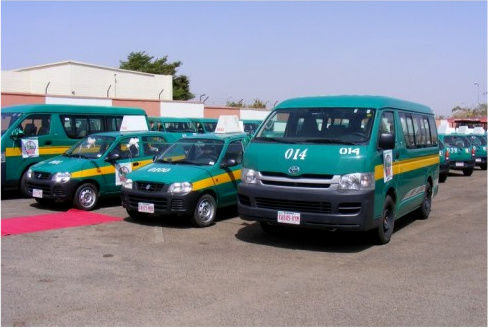
    On Friday, February 24th, 2012 the Plateau State government distributed vehicles worth hundreds of million of naira to citizens under the Tackling Poverty Together Project (TPTP). In a brief ceremony to mark the event, which was held at the Government House, the Commissioner for Works, Chris Hassan, who is also the chairman of the planning committee said the program was designed to remedy the ongoing transportation hardship and to empower the state citizens.

    Hassan maintained that the 100 mini cabs and 14/18-seater buses procured by the state government have been numbered and assigned to specific routes within Jos and Bukuru metropolis. If the beneficiary deviate from their assigned routes, they will be arrested and prosecuted by security agents who have been briefed about the program. He also said that 70 percent of the mini cabs and buses have been designated to routes within Jos while 30 percent are assigned to the Bukuru area.

    The TPTP program is a partnership with Zenith bank, with beneficiaries expected to open accounts and advance a 10 percent payment of the vehicle cost to participate. Thereafter they were given a one-month before starting an installment payment. The payment is expected to complete in two years, after which the beneficiaries will assume its full ownership. The cost of the bus was put at 5.75 million naira each, while the mini cabs are 2.7 million naira each.

     At the inauguration of the program, the state governor, Jonah Jang noted that the poverty level has risen 25% since 1990. He also said that the beneficiaries were selected irrespective of political party affiliation, religious or ethnic backgrounds. Jang also announced a waiver of the 10 percent advance payment for the beneficiaries who could not come up with the money. Jang also announced that the state government would soon embark on major road construction projects which include a fly-over bridge at British/American junction, Secretariat junction, Old airport junction and Miango junction. Meanwhile Governor Jang said that his poverty alleviation plan will include other critical sectors of the economy including agriculture, health and education.


  • THE FEBRUARY 26TH BOMBING IN JOS

    THE FEBRUARY 26TH BOMBING IN JOS

    The Messenger Voice 2/29/2012:

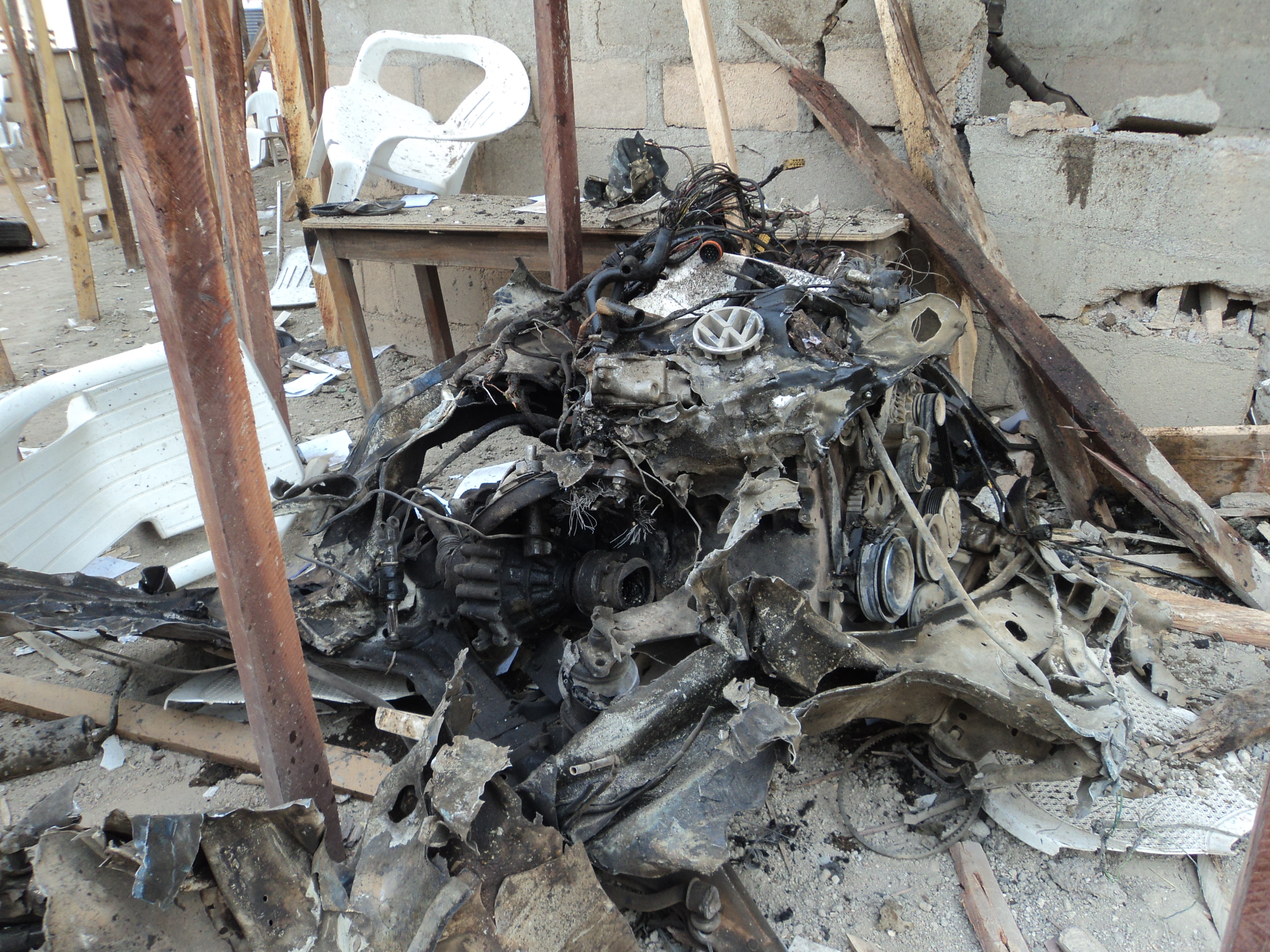
    Sunday, February 26th, 2012 was another dark day in Plateau State as terrorists detonated a bomb at the Headquarters of Church of Christ in Nations (COCIN). Investigations carried out by our team discovered that this bomb detonation was a well-calculated attempt that involved the Military personnel, which provided access to the heavily guarded place.

    The bombers showed up dressed in Military attire as church service began, wanting to gain access to the compound. As member of the Boys Brigade (BB) denied them access, a military officer posted to the church interceded, demanding that access be granted. When the BB refused, the officer overruled them and forcefully opened the gate, letting the men in. Once allowed in, the men proceeded to locate their vehicle close to the church, where members were worshipping in the basement, since the church was under construction.

    Suddenly the vehicle they drove in exploded, instantly killing one of them and leaving the other partially wounded. The crowd descended on the injured bomber, beating him. At the same time, the crowd turned their attention to the military officer who granted the bombers access, beating him as well.

    Meanwhile, a contingent of the Nigerian Military guarding the Central Bank, which is not far from the church made their way upon hearing the blast. As they saw members of the military being beaten, they fired shots into the air and rescued the officers. Apparently, that was how the second bomber was rescued by the Military, since they believed he was one of them because he was wearing a uniform.

    Reports also indicate that a worshipper at the church was killed, beaten to death as he was also suspected to be a bomber. The Plateau State commissioner for information also got caught in the commotion, as the crowd apparently turned on him when he tried to diffuse the situation.

    We should note that Plateau State has experienced a period of calm under the tenure of the former STF commander. Many are now suspicious that his replacement, a Hausa Muslim, has opened the way for terrorist attacks to resume. When interviewing Plateau natives, many believe that the new commander made it possible for these attacks to take place. We should also note that Mosques remain heavily guarded by members of the Nigerian Military, while the churches are left open with little to no guards.


  • HAUSA LEADERS NEGOTIATE FOR BOKO HARAM

    HAUSA LEADERS NEGOTIATE FOR BOKO HARAM

    By Native Journalist Network

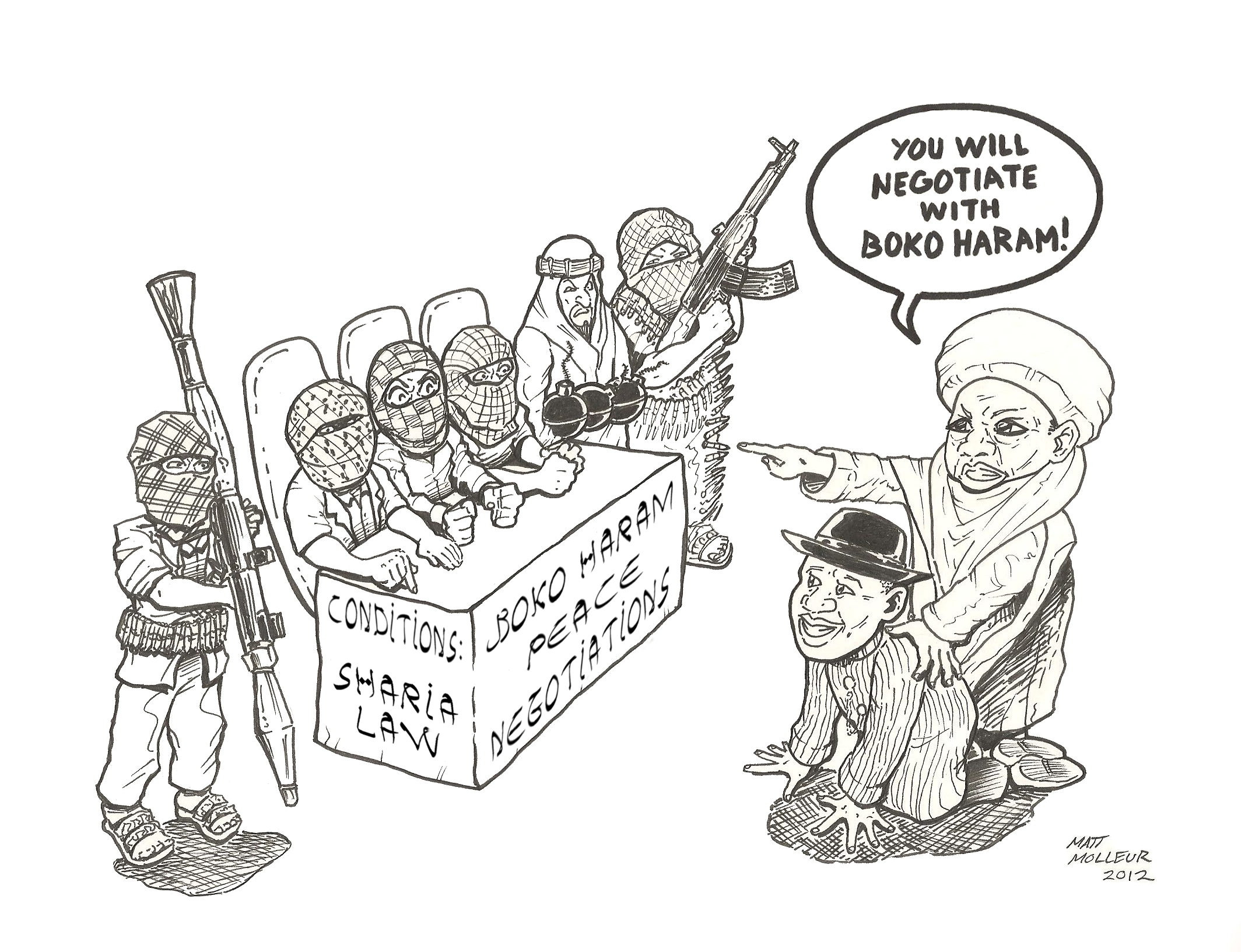
    It is one thing to distort an obscure event that took place in some remote part of the world and quite another to attempt to rewrite a historic event that was observed by many. Yet that is what Hausa leaders have tried to accomplish over the past two months.

    One example of this phenomenon is the press conference that was held by Arewa Conservative Forum (ACF) on Jan 30 2012. Like many Hausa leaders, ACF joined the effort to manipulate President Jonathan into negotiating with Boko Haram (BH). According to ACF, “President Goodluck Jonathan and the Federal Government must commit itself openly and unambiguously by guaranteeing the security of leaders of Boko Haram when eventually they come out for dialogue.” ACF also urged the government to determine their demands and grievances in order to address them in accordance with Nigerian laws.  


    Meanwhile, ACF took issue with Nigerians who believe Boko Haram is backed by some nefarious actors that are trying to make Nigeria ungovernable for their political benefit. According to ACF, “These allegations have been written and widely publicized in the media. Considering the gravity of the allegations bordering on treason, the Forum calls on the government to as a matter of urgency investigate them for the purposes of prosecution.”


    ACF’s position is very suspicious because it urged the government to negotiate with Boko Haram while asking for the prosecution of Nigerians who are probing into the political forces behind the terrorist organization. Worse yet, ACF demanded security guarantees for Boko Haram, an organization that has left Nigeria in a state of complete insecurity. Such a twisted logic begs this question: Who is the real threat to Nigeria’s security–Boko Haram or citizens asking questions?

    One cannot cogently answer the above question without coming to the conclusion that ACF’s convoluted demand is informed by a compelling conundrum which left them an option that was nevertheless a bad alternative. Among the things they must have grappled with is silence itself was an indictment against Hausa leaders. But even more troubling for them, the dots are starting to be connected and Nigerians are evermore becoming suspicious of Hausa leaders. Thus, there was a need for Hausa leaders to launch a defensive offense.

    A key thing Hausa leaders must be trying to avoid is a potential probe that would look into the role they played in arming Islamic militants at the dawn of this ongoing jihad. You should recall, Governor Sani of Zamfara State and other Hausa governors provided arms to several Muslim organizations, giving them the license to kill for the purpose of defending Islam in 2001. What must be turning ACF stomach inside out is that the timing of Sani’s initiative coincides with the emergence of BH. Since an investigation would likely prove that BH received funding from Sani and his colleagues, Hausa leaders are going out on a limb to assure immunity for the group. By doing so, BH would be absolved from revealing its connections with Hausa leaders.

    This supports a long held concern that the tragic summary execution of Umaru Usufu, the late leader of BH, was also an initiative taken to stop him from revealing his relationship with Northern politicians including late President Yar’Adua. You should recall, Usufu was gunned down after he was captured when BH went on a blood curdling rampage in Maiduguri during Yar’Adua’s regime.

    In closing, it is important to emphasize these very important points. Hausa leaders should have no reason to negotiate for a negotiation between the Nigerian government and BH unless they have a vested interest in some kind of an outcome. Also, they should have no reason to call for the prosecution of free speech while demanding immunity for criminals like BH. Moreover, Nigerians should find it very suspicious that Hausa leaders repeatedly defend BH even when they are forced to condemn them.

  • REVELATIONS ABOUT THE BEHEADING VIDEO

    REVELATIONS ABOUT THE BEHEADING VIDEO

    We originally posted that this video took place in Nigeria and was carried out by Boko Haram. Other new reports brought to our attention clarify that the man slain was a Somali Christian who was beheaded by Al-Shabaab, and is believed to have been created in 2008. As our goal is to be truthful and honest, we wanted to break this new finding to set the record straight.

    It is worth being mentioned that three pastors, Sabo Yakubu, Sylvester Akpan and George Orgi were beheaded in a similar fashion in August of 2009.

    The Messenger Voice.

    Nigerian Muslims Behead a Christian Man

  • ESCAPE FROM ABDUCTION

    ESCAPE FROM ABDUCTION

    By V. AL-PEA

    In spite of growing violence committed by Islamic militants on Nigerian Christians in the Middle Belt and North, Plateau State has been enjoying some relative peace. However, it has not been immune to lesser-known forms of attacks—abductions.

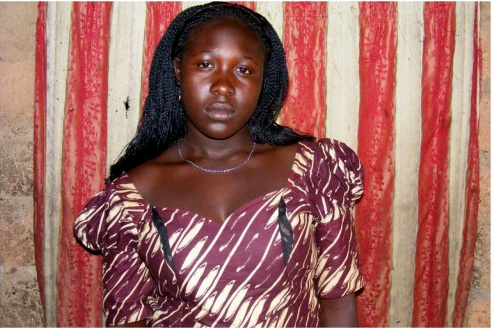
    Patience Vou Jonathan, an eighteen year-old Berom native in Riyom local government area of Plateau State was the target of a common tactic where kidnappers pose as taxi operators and abduct passengers. While narrating her experience to TMV, Patience recounted that on Sunday, 12th February, 2012 at about 2pm, she stood by the road at the Building Material market in Jos South local government area. She boarded a painted taxi on her way to the Church at COCIN RCC Jiye. There were two male and one female passenger in the car. Unfortunately for her, the journey that would have lasted not more 10 minutes took the whole day.

    “Immediately I boarded the cab, I became oblivious of time and my environment as though under a spell. When I finally alighted from the cab and was ordered by my captors towards a duplex ahead of me, I noticed everywhere was pitch dark; it was nightfall”.

    As patience obediently walked into the duplex, she heard the screams of women, children, and some elderly who had their heads clean shaved. As she walked past the wailing victims into another adjoining room, she saw weird looking faces of men chopping into pieces what appeared to be human beings. Suddenly acting from an impulse she blindly ran out of the building and hid in a nearby bush.

    Wielding torchlights to find her, Patience’s captors found and dragged her back into the building where she was brought before a giant grotesque man. After staring at her intently, he shook his head and told her captors in Hausa that he doesn’t need such people. They then took her somewhere outside the building, dispossessed her of her phone and left her to her fate. After hours of wandering aimlessly in the bush she came across a good samaritan who brought her back to Jos.

    Father of the victim, Mr. Jonathan Tinja Zam, a civil servant with the State Fire Service Department reported to the police at the Biye out station when he discovered his daughter had not returned home. He was advised to report to the Divisional police ‘B’ headquarters at Anglo Jos, which he promptly did.

    “I got to the Divisional Police ‘B’ Headquarters at about 11 a.m. of Monday 13th February, 2012 and the officers on duty told me that until it had been 24 hours since my daughter was missing, they could not take action— so I had to wait at the station until 2 p.m. before they took my statement and promised they would send radio messages all round police stations in the state”.

    Few hours later after he had left the station, Mr. Jonathan, who had tried to call his daughter’s phone, received a call from the Good Samaritan that helped her, instructing him to pick her up at the Plateau Riders Motor Park.
    He went there and found her, but the Good Samaritan had left. With this near death experience, Mr. Jonathan is calling on the government to intensify efforts towards looking into nefarious activities like these.

    Patience may have been lucky to escape alive without being physically harmed, but many victims, mostly Christian ladies, are never found. For the few that make it home, the story doesn’t typically end well either. One example is an incident that occurred early last year. Two indigenous female students of the University of Jos, whose names are withheld, were forcefully taken to Angwan Rogo, a predominantly Muslim settlement in Jos North local government area. They were abducted after the taxi they boarded swiftly changed course, taking them to a compound they could not identify. Unfortunately for the girls, they were subjected to dehumanizing sexual abuse as several young boys repeatedly raped them. After two weeks of adduction the girls were released, but one of them later died and the other tested positive for HIV.

    These types of injustices are frequently visited upon Christians by jihadist in the Middle Belt and Northern Nigeria. Unfortunately, the government has a nonchalant attitude towards this type of ugly crime.

  • 400 CHRISTIANS FLEE KILLINGS IN YOBE

    400 CHRISTIANS FLEE KILLINGS IN YOBE

    By V. AL-PEA

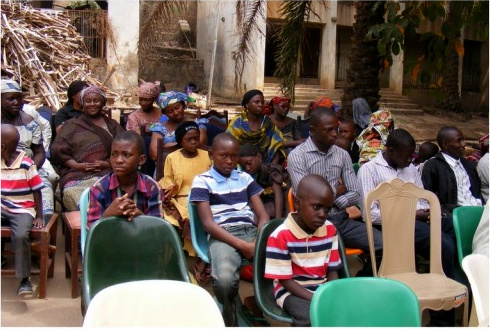
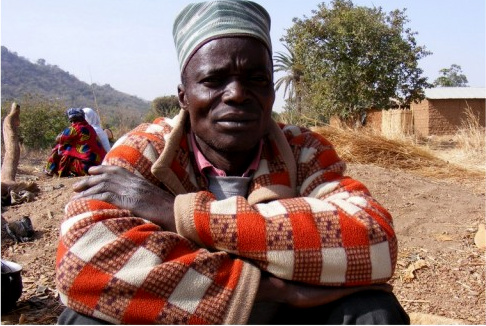
    The Plateau State Commissioner for Environment, Mrs. Sarah Yusuf, welcomed 400 Christian who were seeking refuge in Jos after fleeing systematic killings by Hausa jihadists in Yobe State of Nigeria.

    While presenting over 8 million naira worth of relief supplies to them, Mrs. Yusuf lamented about the hardships they had endured. According to her, “I wished the displaced people were in the comfort of their homes–which is better than giving them these items.” Mrs. Sarah Yusuf then announced that the state government is using the former Tati Hotel at Gada Biyu as a temporary venue to house refugees.

    Meanwhile she stressed the need for all Nigerians to appreciate and tolerate one another irrespective of religion as she handed the relief. Receiving the supplies on behalf of the victims, the President of the Church of Christ In Nations (COCIN), Rev. Soja Bewarang appreciated the kind gesture from Plateau State, thanking the governor for demonstrating a “practical Christian love”. Also expressing thanks was a representative of the refuges, Dr. Adamu Sule who quoted a biblical passage that spoke about Christians fleeing persecution to seek refuge in neighboring lands. Sule further expressed thanks to the leaderships of COCIN, ECWA (Evangelical Churches of West Africa) and some individuals who provided accommodation.

    One of the refugees, who wished to remain anonymous, told The Messenger Voice that the situation in Potiskum and Damaturu local government areas was worse, though their experience was also bad. According to him, houses and businesses belonging to Christians were selected and the occupants shot or hacked to death.

    Items donated by Plateau State included 100 pieces of mattresses, 100 pillows, 250 pieces of blankets, 100 bags of rice, 10 bags of sugar (50kg each), 10 cartons of maggi cubes, 10 cartons of toilet soaps, 10 cartons of laundry soaps, 10 cartons of lotion, 110 bags of salt, 10 bags of tissue paper, 1 carton of matches, 1 bag of per person of tomatoes, onions and hot pepper, 20 cans of palm oil, 20 cans of vegetable oil, 15 bags of garri (cereal grain), 1 carton of smoked fish, three 25 liter containers of kerosene, 15 bags of beans, 80 bags of maize, cooking pots, sweeping brooms, plastic buckets, plastic plates, cups and spoons.


  • AGRICULTURAL REVOLUTION IN PLATEAU STATE?

    AGRICULTURAL REVOLUTION IN PLATEAU STATE?

    By V. AL-PEA

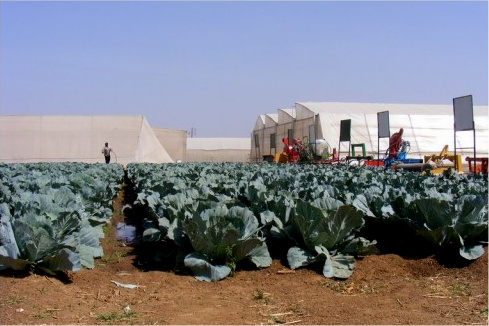
    The governor of Plateau State, Dah Jonah Jang has proposed a vision for developing agriculture into a self-sustaining economy, which he encapsulated in a 10-point agenda centered on mechanized equipment, water resources and rural development.

    This program began in 2008 when Jang signed a joint venture agreement with SEC Equipment and Communication, an Israeli Company specializing in agricultural development. The venture aims to establish Agricultural Services and Training Centers (ASTC), which will increase agricultural productivity by providing diverse field services and technical training of staff and farmers.

    Comprehensive farm centers are slated to be established in the three senatorial districts of Kassa, Vom Northern Zone; Mangu, Central Zone; and Shendam, Southern Zone, where each ASTC will provide mechanized agricultural services and farm inputs, such as tractors and fertilizers.

    By using advanced agricultural technology, the department strives to encourage market driven production. Seminars are also to be conducted to inform participants of the benefits of modernized agriculture available through the ASTC.

  • REPLACING OLD WATER PIPES IN JOS?

    REPLACING OLD WATER PIPES IN JOS?

    By V. AL-PEA

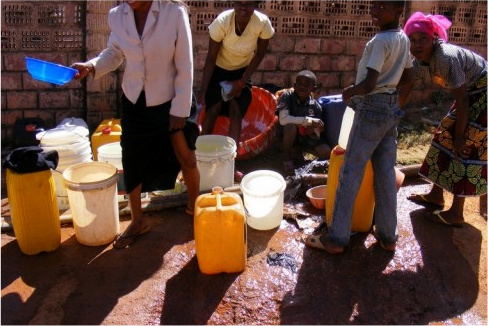
    The Plateau State Commissioner for Water Resources, Alhaji Idi Waziri, has promised to replace old, worn out pipes within Jos.

    During a tour of the city, Waziri stopped at the motor park opposite the Nigerian Television Authority (NTA), where water was gushing out from a control valve. The Commissioner immediately instructed the maintenance unit of the board to rectify the problem, which they did with expediency.

    At the board’s treatment plant situated near the British American Junction, Waziri noticed with dismay that illegal buildings were springing up. He subsequently ordered an immediate stop and declared that government will take drastic action, including demolition of illegal buildings around the area.

    The Commissioner then visited the Bingham University Teaching Hospital (Jankwano) where the management complained about poor water supply, stating that it impedes their operation.

    Research into the matter revealed major water leakages springing from damaged underground pipes, contributing to poor water supply in the city. Pools of water can be witnessed from underground pipes, making it impossible to deliver it to needy residents even when the water is available. Thus, water problems have persisted in Plateau State.

  • BABANGIDA, THE GENOCIDE GENERAL

    BABANGIDA, THE GENOCIDE GENERAL


    A TMV Editorial

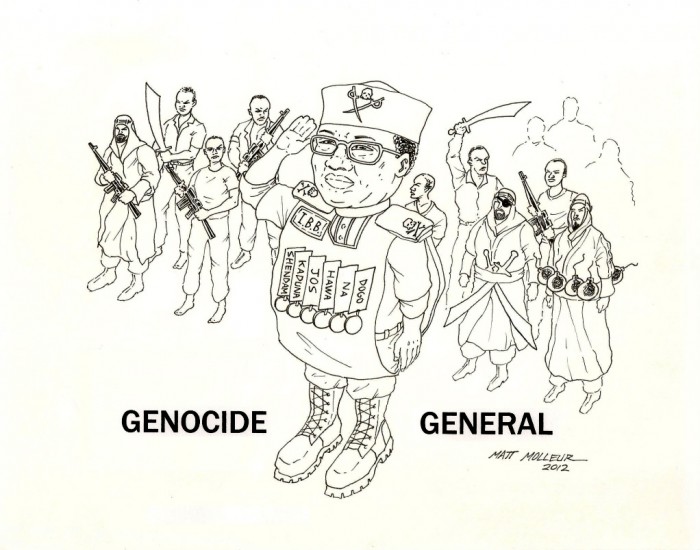
    Most successful nations have a period in their history when either their citizens or leaders overcame personalities or cultural mores which had impaired their progress. Only after transcending their impediments to success were the nations able to attain and maintain international prominence. Such a time is long overdue for Nigeria and a major barrier it must trample is Ibrahim Babangida, the Genocide General.

    While considering a title for this article, this phrase–Baban Kisa–meaning the father of murder in Hausa language–was considered because it properly defined Babangida and because it is eerily similar to his name. However, Genocide General prevailed over Baban Kisa because the non Hausa speaking world would not recognize it. Needless to say, either of the names appropriately describe this former Nigerian dictator since his activities, past and present, continue to claim lives.

    Before delving into the reasons why Babangida is the Genocide General, here is some background information on this very adversely consequential Nigerian. After deposing General Buhari in an internal power struggle on August 27, 1985, Babangida quickly began dipping his hands into Nigeria’s treasury, showing himself to be commander and thief rather than commander in chief. Babangida also became the chief of mischief, using government funds to buy and reward favors, while punishing individuals or regions he deemed hostile to his agenda.

    Among the regions he targeted for sanctions was Plateau State because of its strength and Christian influence in the Middle Belt and Northern Nigeria. The primary measure he took to undermine Plateau State was dividing Jos (the capital) into north and south counties. This enactment provided a mechanism for the Hausa guests to aspire for an emirate in a Christian tribal territory. As Plateau natives vehemently opposed this plan, it triggered a political crisis which graduated into the armed conflict that began on September 7th 2001. Sadly, Jos and other parts of Plateau State are still under military occupation because of the evil that was sowed by Babangida over twenty years ago.

    Besides sowing the seeds of turmoil in Plateau State, Babangida also laid the foundation upon which the modern Hausa Islamic insurgency stands.  First, he inducted Nigeria into the Organization for the Islamic Conference (OIC), dividing Hausa loyalty between Nigerian citizenship and OIC membership. The repercussions of Nigeria’s OIC membership must not be under-appreciated since it created a Hausa Middle Eastern alliance which bolstered jihadism by providing resources from global Islamic Institutions. Moreover, it declared Nigeria a Muslim nation, though Christians, tribal worshipers and agnostics are the silent majority.

    Sadly, Babangida’s damage to Nigeria did not end when he was chased out of office after his bid to succeed himself as a civilian president failed. When his successor, General Abacha was later “prayed to death” and out of power by the desperate fasting and prayer of poor Nigerians, Babangida quickly used his old influence to ensure that power was handed to a fellow Islamist, General Abubakar.

    To understand the significance of Babangida’s intervention, General Abubakar used his brief period in office to create a provision that would allow for sharia law in the North when he oversaw the revision Nigeria’s constitution. This calamity made it possible for proceeding Hausa politicians to enact sharia, turning Nigeria into an ungovernable nation of two laws. Moreover it provided a platform for Hausa jihadists like Boko Haram  who now kill for the purpose of defending and expanding sharia law.

    If the consequences of Babangida’s past activities are the only things ailing Nigeria today, the situation would not be as dire. Documents surfacing are revealing that the general is actively involved in the ongoing Hausa Islamic insurgency.  As he is involved in this deadly campaign whose aim is to drive out southerners from the north and to deplete the collective small tribes of the Middle Belt, Babangida is rightfully the Genocide General.

    As we prepare to release our findings on Babangida’s current activities in Nigeria, here is an important submission: Even if Babangida’s hands  have been clean since his departure from office, Nigerians cannot afford to have a known criminal like him freely walking and enjoying ill gained wealth and power with impunity. Thus Babangida must be hauled before the courts to account for his looting of the Nigerian treasury and for the murder of many, including military officers like General Manman Vatsa during his rule. Nigeria will not progress until it is willing to take such measure.


  • DRIVE BY MURDER IN JOS

    DRIVE BY MURDER IN JOS

    BY V. AL-PEA

    A young man in Kunga II Ward of Jos north local government area of Plateau State was shot by an unidentified gunmen on January 31st, 2012. The incident occurred around 9:00 p.m. near a filling station about 45 meters away from a military checkpoint. The shooting generated a pandemonium among the predominantly Anaguta residents, who subsequently barricaded the major road from neighboring Bauchi State until security agents stepped in to calmed the irate youths.

    Narrating the ordeal to TMV, the father of the deceased, Elder Sani Idi said that the victim, Yusuf Daki was walking home when two Opel Vectra cars suddenly pulled up beside him. The occupants stopped and fired repeatedly, killing him instantly and then speeding towards Bauchi State.

    “That night we were home, then suddenly we heard sporadic gunshots and we quickly mobilized and ran to the roadside, the direction of the shots. Then we saw two Opel Vectra cars take off and speed towards Bauchi. We tried to pursue them, but of course we were on foot and were no match for them”. It was a few minutes later that Idi learned his son, 48 years old; husband of two wives and father of 6 children was the victim.

    TMV visited the police outpost in Kunga to get comments on the murder, but the officer on duty coldly claimed ignorance. The officer advised TMV to visit Angwa Rogo Divisional Headquarters for details on the case.

    Calling on the government and security agents to be more vigilant, Idi lamented that this was the third time such gory incidents have occurred in the community. One of the attacks apparently occurred on January 1st, 2012, but fortunately the victim sustained a nonfatal injury.